Discover the Mystical Jellyfish of Sardinia: A Guide to Their Beauty and Habitat
Their elegance is simplicity, a creature of water and pulse in an ocean of complexity.
Beneath the shimmering turquoise waters of Sardinia lies a hidden world teeming with life, where mystical jellyfish float gracefully like ethereal beings. These mesmerizing creatures, often overlooked, harbor a beauty that captivates both nature enthusiasts and casual beachgoers alike. With their translucent bodies and delicate tentacles, jellyfish are not only a sight to behold but also play a crucial role in the marine ecosystem.
In this comprehensive guide, we invite you to explore the enchanting realm of Sardinia’s jellyfish, uncovering their unique habitats and the vital importance they hold in the delicate balance of sea life. Looking for a local guide for a multi-day tour? Check out this page
THE UNIQUE SPECIES OF JELLYFISH FOUND IN SARDINIA
Sardinia, the second-largest island in the Mediterranean Sea, is home to a variety of unique and captivating jellyfish species. Among these, the most commonly encountered is the Pelagia noctiluca, also known as the mauve stinger. With its shimmering, bioluminescent body, this jellyfish illuminates the waters with a soft glow, creating a mesmerizing underwater spectacle. Its delicate tentacles, which can grow up to a meter long, sway gracefully as it drifts through the currents, making it a favorite subject for underwater photography enthusiasts.
Another notable species is the Rhizostoma pulmo, commonly referred to as the barrel jellyfish. This jellyfish stands out due to its impressive size, with some individuals reaching up to 90 centimeters in diameter. Its bell-shaped body is adorned with a distinctive ruffled edge, and its tentacles are short and thick, resembling cauliflower. Despite its imposing appearance, the barrel jellyfish is relatively harmless to humans, making it a fascinating creature to observe up close.
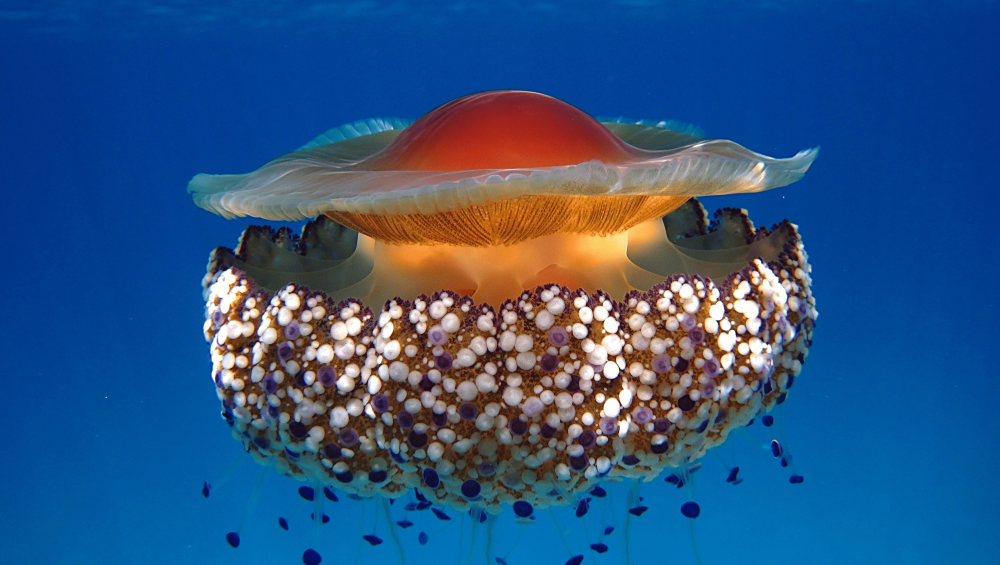
The Cotylorhiza tuberculata, or fried egg jellyfish, is another species that adds to the diversity of Sardinia’s marine life. Aptly named for its resemblance to a sunny-side-up egg, this jellyfish is characterized by its yellow central dome and radiating white arms. It is often found floating near the surface, where it feeds on plankton and small fish. The fried egg jellyfish is known for its symbiotic relationship with various juvenile fish species, which seek refuge among its tentacles, highlighting the intricate connections within the marine ecosystem.
THE ECOLOGY OF SARDINIA’S MARINE ENVIRONMENT
The marine environment of Sardinia is a complex and dynamic system, shaped by a variety of physical, chemical, and biological factors. The island’s coastal waters are characterized by their clarity and rich biodiversity, supported by a combination of warm temperatures, nutrient-rich currents, and diverse habitats. From rocky shores and sandy beaches to seagrass meadows and coral reefs, each ecosystem plays a vital role in sustaining the abundant marine life that calls Sardinia home.
Seagrass meadows, particularly those formed by the Posidonia oceanica, are one of the most important habitats in Sardinia’s marine environment. These underwater grasslands provide shelter and food for a wide range of species, including fish, crustaceans, and mollusks. They also play a crucial role in maintaining water quality by stabilizing sediments and absorbing nutrients. The presence of seagrass meadows is indicative of a healthy marine ecosystem, and their conservation is essential for the sustainability of marine life in the region.
Coral reefs, although less extensive than those found in tropical regions, are also present in the waters surrounding Sardinia. These reefs are formed by the accumulation of calcium carbonate skeletons produced by coral polyps, and they provide habitat and shelter for a diverse array of marine organisms. The reefs contribute to the island’s biodiversity by offering breeding grounds and feeding areas for numerous species. The health of these coral reefs is closely monitored, as they are sensitive to changes in water temperature and quality, making them important indicators of environmental health.
JELLYFISH LIFE CYCLE AND BEHAVIOR
Understanding the life cycle and behavior of jellyfish is key to appreciating their role in the marine ecosystem. Jellyfish undergo a complex life cycle that includes both sexual and asexual reproduction, allowing them to thrive in various environmental conditions.
- The life cycle begins with the release of eggs and sperm into the water, where fertilization occurs. The resulting larvae, known as planulae, settle on the ocean floor and develop into polyps.
- Polyps are stationary and can reproduce asexually by budding, producing tiny jellyfish known as ephyrae.
- These ephyrae eventually grow into adult medusae, the free-swimming stage most commonly recognized as jellyfish. This dual reproductive strategy allows jellyfish populations to increase rapidly under favorable conditions, contributing to their success as a species.
The ability to switch between sessile and motile stages enables jellyfish to exploit a wide range of habitats and resources. Behaviorally, jellyfish are known for their unique mode of locomotion. They move by contracting and relaxing their bell-shaped bodies, propelling themselves through the water with a rhythmic pulsation. This movement is not only efficient but also graceful, giving jellyfish their characteristic ethereal appearance. While they are often carried by currents, jellyfish can also exhibit vertical migration, moving up and down the water column to optimize their position for feeding and reproduction.
Jellyfish are opportunistic feeders, primarily consuming zooplankton, small fish, and other gelatinous organisms. Their tentacles are equipped with specialized cells called cnidocytes, which contain stinging structures known as nematocysts. These nematocysts can deliver a potent sting, immobilizing prey and facilitating ingestion. The feeding behavior of jellyfish plays a crucial role in controlling plankton populations, highlighting their importance in the marine food web.
THE ROLE OF JELLYFISH IN SARDINIA’S ECOSYSTEM
Jellyfish play a multifaceted role in Sardinia’s marine ecosystem, contributing to both the structure and function of the environment. As predators, they help regulate populations of plankton and small fish, maintaining a balance within the food web. Their feeding activities can influence the distribution and abundance of other marine organisms, creating a dynamic interplay between different species.
In addition to their role as predators, jellyfish also serve as prey for a variety of marine animals. Sea turtles, for example, are known to feed on jellyfish, with some species relying on them as a primary food source. This predation helps control jellyfish populations and prevents overabundance, which can have detrimental effects on the ecosystem. The presence of jellyfish in the diet of sea turtles highlights the interconnectedness of marine species and the importance of maintaining biodiversity.
Jellyfish also contribute to nutrient cycling within the marine environment. When jellyfish die, their bodies decompose, releasing nutrients back into the water. This process, known as marine snow, provides a critical source of organic matter for deep-sea ecosystems. The decomposition of jellyfish can enhance nutrient availability, supporting the growth of phytoplankton and other primary producers. This nutrient cycling is essential for sustaining the productivity and health of marine ecosystems.
SAFETY TUPS FOR SWIMMING NEAR JELLYFISH
While jellyfish are undoubtedly fascinating creatures, it is important to exercise caution when swimming near them. Their tentacles contain stinging cells that can cause discomfort or even serious injury, depending on the species and the individual’s sensitivity. By following a few simple safety tips, you can minimize the risk of jellyfish stings and enjoy a safe and memorable encounter with these marine wonders.
First and foremost, it is essential to stay informed about local jellyfish conditions before entering the water. Many beaches and coastal areas provide warnings and information about jellyfish presence, especially during peak seasons. Pay attention to any advisories or signage, and consult with lifeguards or local authorities if you have any concerns. Being aware of the current situation can help you make informed decisions about where and when to swim.
If you do encounter jellyfish while swimming, it is important to maintain a safe distance and avoid touching them. Jellyfish tentacles can still sting even if the jellyfish is dead or appears inactive. If you are stung, it is crucial to remain calm and seek immediate assistance. Rinse the affected area with seawater (not freshwater), as freshwater can exacerbate the sting. Removing any tentacles with tweezers or the edge of a credit card can help minimize the severity of the sting. Applying vinegar or a commercial jellyfish sting treatment can also provide relief and prevent further irritation.
Wearing protective clothing, such as a wetsuit or rash guard, can offer an additional layer of protection against jellyfish stings. These garments can reduce the likelihood of tentacles coming into direct contact with your skin. Additionally, swimming with a buddy and avoiding areas with high jellyfish concentrations can further enhance your safety. By taking these precautions, you can reduce the risk of jellyfish stings and enjoy your time in the water with confidence. Take a look our special guide about Snorkeling Activity
SAFETY TUPS FOR SWIMMING NEAR JELLYFISH
The conservation of jellyfish and marine life in Sardinia is of paramount importance, given the critical role these organisms play in the ecosystem. Efforts to protect and preserve Sardinia’s marine biodiversity are multifaceted, involving scientific research, habitat protection, and public awareness campaigns. These initiatives aim to ensure the long-term health and sustainability of the island’s marine environment.
One of the key conservation efforts in Sardinia is the establishment of marine protected areas (MPAs). These designated zones restrict human activities such as fishing, boating, and development, allowing marine ecosystems to recover and thrive. MPAs provide safe havens for jellyfish and other marine species, protecting their habitats from destructive practices. The Asinara National Park and the Tavolara-Punta Coda Cavallo Marine Protected Area are examples of MPAs in Sardinia that play a crucial role in conserving marine biodiversity.
Scientific research is another important aspect of jellyfish conservation. Researchers study jellyfish populations, their behavior, and their interactions with other marine organisms to gain a deeper understanding of their ecological importance. This knowledge is essential for developing effective management strategies and addressing potential threats. Monitoring programs track jellyfish blooms and their impact on the ecosystem, providing valuable data for conservation efforts.
Public awareness and education are also vital components of jellyfish conservation. By increasing awareness of the importance of jellyfish and the challenges they face, conservation organizations encourage responsible behavior and foster a sense of stewardship among the public. Educational programs, workshops, and outreach campaigns engage local communities, tourists, and stakeholders, promoting sustainable practices and the protection of marine life. These collective efforts contribute to the preservation of Sardinia’s rich marine heritage for future generations.
FASCINATING MYTHS AND FACTS ABOUT JELLYFISH
Jellyfish have long captivated human imagination, giving rise to a plethora of myths and misconceptions. These enigmatic creatures, with their otherworldly appearance and mysterious behavior, have inspired stories and legends across cultures. Separating fact from fiction can enhance our understanding and appreciation of jellyfish, revealing the true marvels of these gelatinous wonders.
One common myth is that all jellyfish are dangerous and deadly to humans. While it is true that some species possess potent venom capable of causing serious harm, the majority of jellyfish stings result in mild discomfort akin to a bee sting. Species such as the mauve stinger and the box jellyfish are known for their painful stings, but many others, like the moon jellyfish, pose little threat to humans. By exercising caution and respecting jellyfish in their natural habitat, encounters can be safe and awe-inspiring.
Another intriguing myth is the belief that jellyfish are immortal. This idea stems from the unique life cycle of certain jellyfish species, such as Turritopsis dohrnii, also known as the “immortal jellyfish.” This species has the remarkable ability to revert to its polyp stage after reaching maturity, essentially starting its life cycle anew. While this process can occur under specific conditions, it does not confer true immortality. Nonetheless, the regenerative capabilities of Turritopsis dohrnii highlight the astonishing adaptability and resilience of jellyfish.
Jellyfish have also been subjects of folklore and mythology, often symbolizing transformation and renewal. In Japanese culture, jellyfish are featured in the creation myth, where they are depicted as shapeshifting creatures involved in the formation of the islands. In Greek mythology, Medusa, one of the Gorgons, is often associated with jellyfish due to her snake-like hair and petrifying gaze. These mythical associations reflect the enduring fascination with jellyfish and their mystical qualities.
CONCLUSION: EMBRACING THE MYSTIQUE OF SARDINIA’S JELLYFISH
As we conclude our exploration of Sardinia’s mystical jellyfish, it becomes evident that these captivating creatures are more than mere inhabitants of the sea. They are integral to the marine ecosystem, contributing to biodiversity, nutrient cycling, and ecological balance. Their ethereal beauty and enigmatic behavior continue to mesmerize and inspire awe, inviting us to delve deeper into the wonders of the underwater world.
By understanding the unique species of jellyfish found in Sardinia, their life cycle, and their ecological roles, we gain a greater appreciation for their significance. The best locations for jellyfish spotting offer opportunities for unforgettable encounters, while safety tips ensure that these experiences are both enjoyable and secure. Conservation efforts highlight the importance of protecting marine life and fostering sustainable practices, ensuring that future generations can continue to marvel at the jellyfish’s splendor.
The myths and facts surrounding jellyfish remind us of the rich tapestry of human imagination and the enduring allure of the natural world. Embracing the mystique of Sardinia’s jellyfish encourages us to cherish and protect the marine environment, fostering a deeper connection with the ocean and its inhabitants. As we venture into the shimmering waves of Sardinia, let us celebrate the mystical jellyfish and the magic they bring to this Mediterranean paradise.
BEST SNORKELING SPOTS IN SARDINIA
Sardinia offers a plethora of snorkeling spots, each with its own unique charm and attractions. Here are some of the best snorkeling sites that you shouldn’t miss during your visit:
- Archipelago of La Maddalena: Located off the northeastern coast of Sardinia, the Archipelago of La Maddalena is a national park renowned for its breathtaking beauty. Here, you’ll find a collection of islands and islets surrounded by crystal clear waters teeming with marine life. Snorkelers can explore the colorful underwater landscapes, swim alongside curious fish, and even encounter friendly dolphins if they’re lucky. The stunning beaches and secluded coves also make for idyllic spots to relax and soak in the natural beauty of the surroundings.
- Nurra Area: Nestled in the stunning Alghero region, the wild beaches of the Nurra area are true hidden gems of Sardinia. These remote stretches of coastline feature powdery white sand and crystal-clear azure waters, ideal for snorkeling. Dramatic rock formations shape a fascinating underwater landscape, rich with vibrant sea flora and schools of colorful fish. As you explore, keep an eye out for octopuses, small fish, and other captivating marine life that thrive in this untouched corner of the island.
- Cala Mariolu: Located on Sardinia’s eastern coast, Cala Mariolu is a hidden paradise accessible by boat. Its secluded location ensures that the waters remain pristine, providing an ideal setting for snorkeling enthusiasts. The crystal clear waters of Cala Mariolu are known for their rich biodiversity, with colorful fish and marine plants creating a vibrant underwater ecosystem. Explore the underwater caves and crevices, and marvel at the natural beauty that abounds in this secluded snorkeling spot.
These are just a few examples of the incredible snorkeling spots that Sardinia has to offer. Whether you prefer rocky coastlines, sandy beaches, or hidden coves, there’s a snorkeling spot in Sardinia that will captivate your imagination and leave you in awe of the underwater world.